That means I’ve been writing about pop culture, marketing, brand strategy, and the arts for two decades.
I remember wanting my own website as soon as we learned to type with 10 fingers and search for information online with AltaVista. This was in our eighth-grade computer studies class, where everyone just wanted to join online chat rooms or play Quake over a local network. It was all very 90s.
I had no idea what I would’ve done with my own piece of digital real estate. Nevertheless, I felt compelled.
The school didn’t offer hosting, so I had to hold on to my dream until 2006, when blogging was becoming more mainstream and publishing platforms were becoming more available.
The website started as a personal diary, before becoming more focused on pop culture and marketing. Here’s the full oral history in Finnish.
Nowadays, it increasingly represents my professional self, highlighting my work experience as a brand strategist and creative.
That said, I’ve always written about movies, music, books, and video games – and don’t plan on separating my fanboy self from my professional self anytime soon. Because both marketing and pop culture boil down to the same thing: creativity.
What is the Golden Circle of brand positioning?
As a thought experiment, what if I used one of the most common brand positioning tools on this website?
The Golden Circle, popularized by Simon Sinek, aims to define a brand’s what, why, and how. That makes it one of the easiest ways to distill a brand’s essence.
The Golden Circle
Why
This is the purpose, the belief, the very reason the brand exists.
How
These are things that set the brand apart from competitors.
What
These are the products or services that the brand offers.
So, what are the what, how, and why for this website? For Hurraakerkko.com, the Golden Circle would be something like this:
What
An inspiration source for creative minds.
How
Hot takes on brand-building and pop culture classics.
Why
To celebrate creativity.
After two decades, what does creativity mean for me?
Much like brand strategy tools like the Golden Circle, creativity helps me anchor myself.
By writing, making videos, and composing music, I learn more about myself and the world. Whether I’m working on something original or analyzing someone else’s work, it is my experience, my point of view on display.
I wouldn’t be myself without creativity. And for the past 20 years, this website has been at the heart of my creative journey, both professionally and personally.
Feeling thankful for reaching this milestone. Thanks for reading,
Here are 10 things the legendary rap group Wu-Tang Clan taught me about working in a creative agency.
You don’t have to be 100% original to be 100% original
Wu-Tang Clan is known for its unique sound. Their trademark is using snippets of dialogue from old martial arts movies. The title of their debut album is the most obvious reference to their influences.
But they also sampled everyone from American jazz pianist Thelonius Monk to Russian composer Sergei Prokofiev, too. Surprising, right? Even originals are inspired by others.
Create a growth plan
The group always had the business acumen to look ahead. They negotiated an exceptional record deal that allowed members to sign solo contracts with other labels. Many brands claim to be disruptive, but Wu-Tang’s strategy truly earns that description.
The payoff for Wu-Tang fans is clear. That’s why we have classic albums like Ghostface Killah‘s Supreme Clientele and Raekwon‘s Only Built 4 Cuban Linx.
Agencies should plan beyond that one deadline and build on the team’s strengths. You’ll surely find the momentum to expand.
The importance of working together
Shame on a colleague who tried to run game on a colleague.
Stand out with your writing
Take a closer look at Wu-Tang’s lyrics. You’ll discover layers upon layers of references. They cover everything from contemporary pop culture to ancient history. The Wu-Tang Clan didn’t just brag or insult others. Their verses travel through time and space with an effortless flow that still goes unmatched today.
Team members can (and should) have voices of their own
Each member of the group had their distinct tonal, rhythmic, and lyrical signatures, but it’s all 100% Wu-Tang. Let everyone’s unique talent shine through.
Coming into your voice takes time
Choosing tone of voice descriptors for your brand platform is as easy as rhyming trivia with Bolivia, but it takes time for your voice to mature and come to life.
Just listen to Masta Killa whose aggressive bite on Enter The Wu-Tang (36 Chambers) mellows out on later albums. Copywriters, keep writing, and you’ll find new nuances to your TOV.
Look into audio branding
Sure, Wu-Tang Clan’s music has a distinct sound – but the movie clips and minimalist beats are only one part of their audio experience. Even their name is a sound effect.
That is, at least if you believe GZA. To paraphrase what he told the audience during his 2019 gig in Helsinki, “Wu is the sound of the sword cutting through the air. Tang is the sound of the sword’s impact on your opponent’s thick skull.” This obviously refers to the power of Wu-Tang’s lyrics. To them, words are weapons.
Just make your audio signature street-credible and short enough. If we listen to other artists, grunting “G-Unit” is great, but shouting your name as if you’re orgasming is not (looking at you, Jason Derulo).
Endless deadlines and rounds of feedback will get to you, especially if you suffer from imposter syndrome (it’s an agency, everyone does). But eventually, the challenges become a source of strength and wisdom.
The Wu-Tang members’ childhoods in poor and crime-ridden projects could’ve turned them into promoters of violence, but they were able to rise above.
Even the Kung Fu movie references speak more to control and peace than chaos. Just listen to the intro of one of my all-time favorite Wu tracks, Campfire.
A signature skill leads to new opportunities
There will be times when you think you’re stagnating or limited by your role. While being pigeonholed is frustrating, mastering your craft will eventually lead to new opportunities.
From merchandising to motivational speaking to scoring films, the Wu have certainly expanded far beyond music. Even acting – RZA & GZA have made memorable acting appearances on film & TV (Chappelle’s Show was my true introduction to the band’s brilliance).
Jim Jarmusch’s short film Delirium, which stars RZA, GZA & comedy legend Bill Murray, is still one of my all-time favorite movie scenes.
Don’t just promote a product, promote a mindset
Even though individual members are formidable talents on their own, together the supergroup of MCs has gone much further than just a musical act. Their sound, look, and charisma combine into an entire mindset, a guiding philosophy that shines through and continues to influence creatives generation after generation.
When your agency pitches any branding project to a client, remember that a brand isn’t only a visual identity, and a product can be much more than its physical form. Capture a mindset, a discipline, a way of life – and your brand will entice and endure.
(Caveat: no brand will ever outlive Wu-Tang Clan, though. Because Wu-Tang is forever.)
Ready to enter the 36th Chamber
I want to thank RZA, GZA, Method Man, Raekwon, Ghostface Killah, Inspectah Deck, U-God, Masta Killa, Ol’ Dirty Bastard, and Cappadonna for these lessons on creativity.
Disclaimer: This article is not sponsored by MasterClass
Every creative needs inspiration to come up with ideas, test different approaches, and keep learning. One of the most captivating sources of inspiration is the MasterClass platform.
MasterClass is an online education platform that hosts tutorials and lectures pre-recorded by experts in various fields. Examples include President Bill Clinton on inclusive leadership and Samuel L. Jackson on acting.
I want to share some insights to help anyone working in an advertising agency or in the creative industry hone their craft and boost career confidence.
These insights come from more than twenty courses in fields such as arts and entertainment, business, wellness, and more. To make them easier to follow, I have divided the insights into five sections.
On the importance of keeping an open mind
On the importance of keeping an open mind
To begin with, filmmaker James Cameron stresses the value of curiosity. In his words, the importance of staying curious cannot be overstated.
“Live life and observe. Before you can radiate, you need to absorb,” Cameron explains. In other words, the best ideas grow from what you have seen or felt first-hand. As a result, observing life helps you appreciate life more deeply.
Similarly, in their MasterClass on advertising, Jeff Goodby and Rich Silverstein quote industry legend David Ogilvy. They advise creatives to write for only two hours instead of ten. “The rest of the time, you should find things to write about.”
At this point, you may wonder: you can make the time, but how do you find inspiration? Humorist David Sedaris offers one approach: “say yes to weird experiences.”
In addition, music producer Timbaland reminds us that finding inspiration is not a one-off exercise. Instead, you should always stay tuned in. He instructs you to study the greats, whatever that means in your craft. However, he also adds that you must “evolve your influences.”
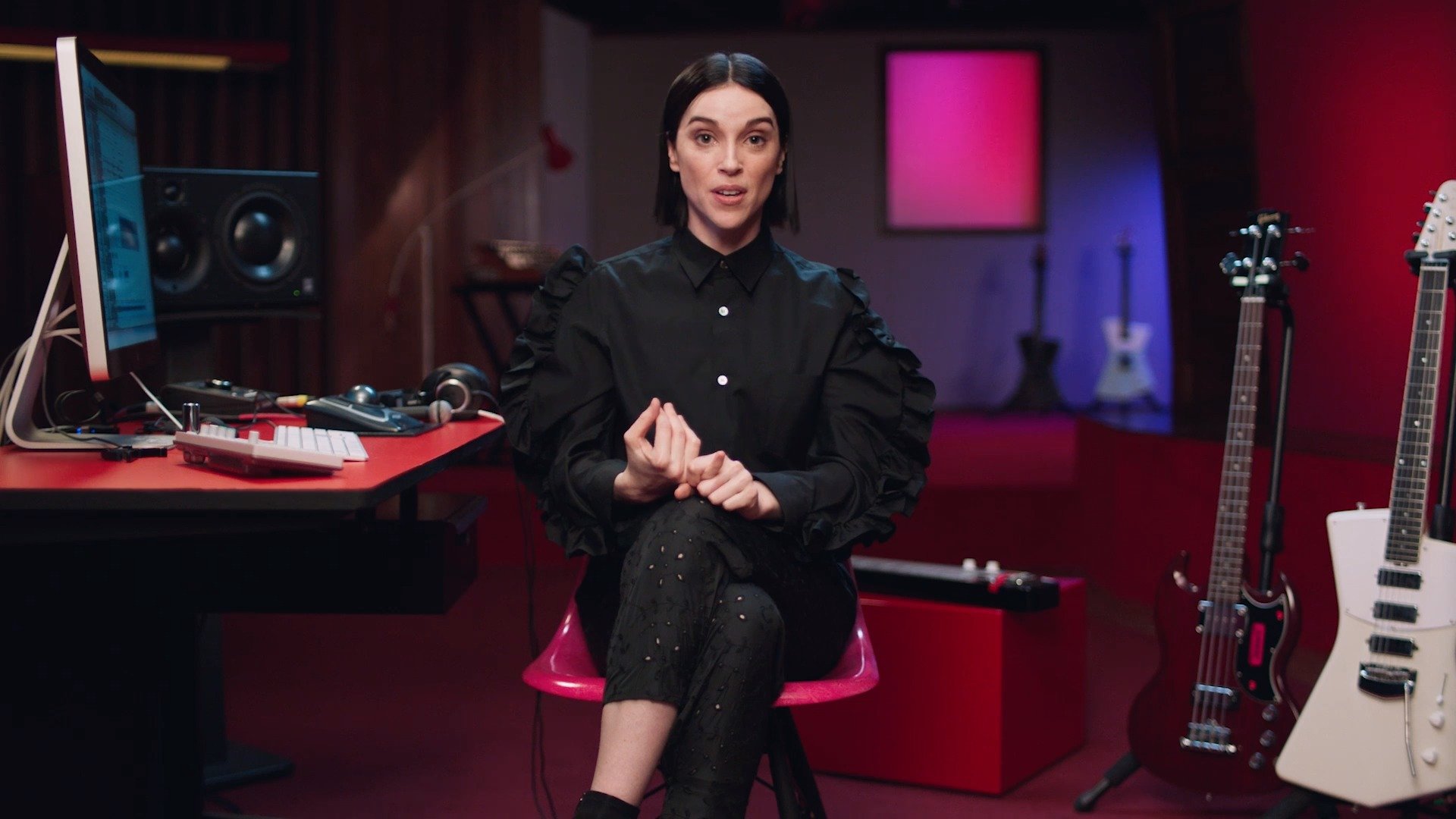
St. Vincent teaches songwriting on MasterClass.
On the importance of practice
We all know the saying “practice makes perfect.” In fact, honing your craft patiently is especially important for junior talents. At the same time, even seasoned veterans cannot rest on their laurels.
Once you begin, negotiator Chris Voss suggests that it takes 40–60 repetitions before the skill feels natural.
Of course, that number might sound exhausting and tedious. However, there is an upside to the drills. According to Voss, “feeling awkward is a sign that you’re learning.”
In a similar vein, musician St. Vincent talks about what she calls generative songwriting. Put simply, the principle applies to any craft: “the more you do it, the more you’re able to make.”
On the other hand, going it alone may not take you as far as you want to go. Therefore, it is a good idea to ask someone for guidance. This should be someone with appropriate experience. Yet, as journalist Elaine Welteroth reminds us, “mentors don’t have to be your senior.”
Esther Perel teaches relational intelligence on Masterclass.
On the importance of personal skills
Giving feedback is one of the key responsibilities of a mentor (or any colleague, for that matter). We all have our own ways of giving and receiving feedback, and this can lead to misunderstandings or even conflict.
Psychotherapist Esther Perel suggests asking for feedback on your feedback. Has my advice helped you to do things differently? Was it actionable?
Sometimes things get heated in the workplace. Voss says appropriate labeling can help disarm a conflict. This means naming the other person’s emotions by saying, “You’re upset?” Labeling negatives might cancel them, and labeling positives reinforces them.
But do remember to distinguish what’s relevant to a professional negotiation. As Sedaris says, “truth is different from feelings.”
Timbaland teaches music production on MasterClass.
On the importance of owning your idea
You might think it’s just a job – and that is fine.
But as former White House Communications Director George Stephanopoulos says, “those who work to interpret and communicate do get personally invested in things that aren’t directly personal.” This is something he learned while covering 9/11 for ABC News.
And when you do find something personal, don’t stop believing in your idea or signature style.
“Everyone has their own bounce. Hold on to yours,” Timbaland says. He uses the song Pong as an example. He wrote the R&B classic nine years before Ginuwine got a record deal. “If you get frustrated, it’s good because it shows your love is real.”
On the importance of self-care
Whatever your craft is, remember that your career is a marathon, not a sprint. Take your time.
Don’t forget to take care of yourself as well. Welteroth suggests creating a self-care strategy, including actual calendar bookings for something that gives you energy – and committing to the routine.
Bonus tip: mix & match what you’ve learned
A screenwriter teaches you screenwriting. A career coach teaches you to design your professional growth path.
But oftentimes, the most interesting ideas materialize when you apply learnings from one discipline to another. A writer can draw inspiration from a designer, just like a musical artist can learn from a cinematographer. The variety of topics and instructors on MasterClass is a testament to that. Remember to keep an open mind.